
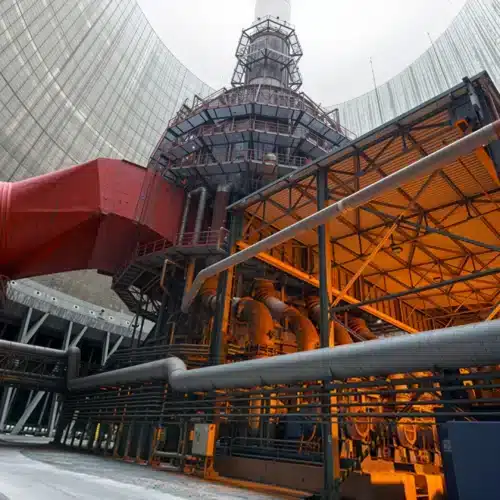










With the flexibility to quickly restore and recondition various sizes and types of industrial equipment and machinery with dry ice cleaning, we minimize the costly downtime and disruption generally associated with industrial cleaning.
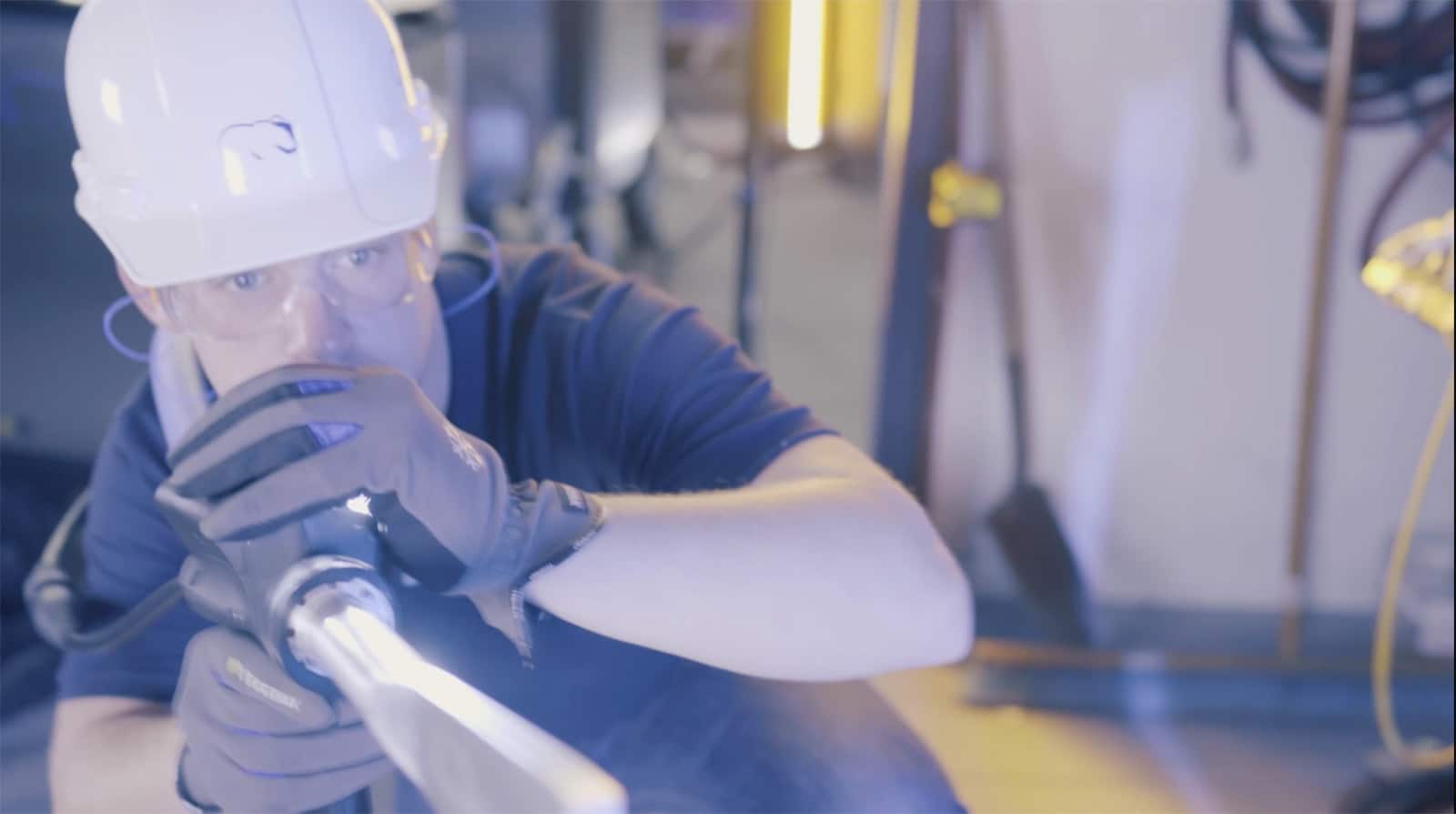
Dry Ice Blasting Equipment for Power Generation
Reduce Downtime and Prevent Equipment Failures with Non-Conductive Dry Ice Blasting
Safe and Efficient Cleaning Across Gas, Hydro, Nuclear, Coal, and Substation Infrastructure
Cold Jet dry ice blasting delivers exceptional cleaning results for utilities, independent power producers (IPPs), and power plant operators across all power generation sectors. By replacing water-based cleaning, abrasive methods, and time-consuming manual cleaning with a dry, non-conductive solution, power generation operators achieve:
- Up to 90% Faster Cleaning: Dramatically reduce outage time across all power generation sectors—turbines, generators, HRSG systems, and substations cleaned in a fraction of the time required by traditional methods.
- Significantly Improve Electrical Performance: Restore insulation resistance by 600% on average, with improvements up to 1,000% documented. Polarization indices improve from critical levels (1.04) to acceptable range (2.30).
- Safe for Electrical Equipment: Non-conductive, moisture-free cleaning enables safe maintenance of switchgear, control cabinets, transformers, and high-voltage substations.
- Zero Secondary Waste: Dry ice sublimates completely upon impact, eliminating water disposal and hazardous waste handling. With no drying time required, components can be returned to service immediately.
- Clean In-Place: Eliminate equipment disassembly—clean while components remain installed and reach areas inaccessible to traditional methods.
Ready to reduce unplanned outages and extend asset life? Contact us to learn how Cold Jet dry ice blasting can cut maintenance time and keep your systems operating at peak efficiency.
What are the Benefits of Dry Ice Blasting for Power Generation?
Optimize Asset Performance and Minimize Scheduled Outages
Dry ice blasting provides a non-conductive, non-abrasive, zero-waste cleaning solution that removes heavy fouling, carbon buildup, grease, surface oxidation, and corrosive salts without damaging sensitive assets. By eliminating secondary waste and drying time, it allows for immediate inspection and a faster return to service.
Traditional cleaning methods—such as chemical solvents, high-pressure washing, and abrasive blasting—introduce significant operational risks. These processes can lead to moisture-induced corrosion, grit entrapment in precision components, and the degradation of delicate insulation. They also generate vast amounts of secondary waste, turning a routine maintenance task into a costly logistical and environmental challenge.
Cold Jet dry ice blasting eliminates these problems and provides the following benefits for power generation facilities:
-
Dramatic Reduction in Outage Time
Dry ice blasting removes carbon buildup, fouling, and surface oxidation from critical assets—including gas turbines, generators, HRSG tube bundles, and electrical systems. Operators report cleaning time reductions of up to 90% compared to traditional methods. In one instance, a power producer completed the cleaning of an 8-megawatt turbine in just four hours, a task that previously required five days of manual labor. This massive reduction in downtime helps utilities meet aggressive outage schedules and maximize plant availability.
-
Restores Thermal Efficiency and Equipment Performance
Dry ice blasting optimizes heat transfer by removing insulating deposits from finned surfaces and internal cooling passages. Power producers have documented a 12% improvement in power output following dry ice cleaning, compared to just 4% with traditional methods. By penetrating deep into dense tube banks to eliminate bridging, the process reduces differential pressure and lowers fuel consumption, directly improving the plant’s overall heat rate and bottom line.
-
Safe Around Electrical Equipment
Dry ice cleaning is non-conductive, making it safe for cleaning substations, generator windings, motor stators, transformers, and control systems without risk of electrical shorts or equipment damage. Utilities document insulation resistance improvements averaging 600% with some generators showing 1,000% increases. The moisture-free process prevents electrical tracking in windings and eliminates leakage currents that lead to flashovers and unplanned outages.
-
Protects Equipment from Damage
Cold Jet dry ice blasting is non-abrasive and eliminates the risk of surface erosion or pitting on precision-machined components. Unlike grit blasting, which can alter critical tolerances, or pressure washing, which risks moisture-induced corrosion, dry ice removes stubborn contaminants while preserving the original substrate. This allows for the safe cleaning of delicate winding insulation and turbine blade profiles without the removal of base material.
-
Eliminates Secondary Waste
Dry ice sublimates completely upon impact, leaving zero secondary waste. This eliminates the cost and complexity of reclaiming contaminated water, disposing of spent abrasive media, or managing hazardous chemical runoff. While this is a critical advantage for nuclear facilities looking to minimize radioactive waste volumes, it also provides massive logistical savings for fossil and hydro plants.
Dry Ice Blasting Applications for Power Generation
Cold Jet dry ice blasting equipment provides cleaning and maintenance solutions across five primary power generation sectors:
-
Natural Gas Power Plants
-
Hydroelectric Facilities
-
Nuclear Power Generation
-
Steam Generation & Coal-Fired Plants
-
Electrical Substations
Natural Gas Power Plants
Dry ice blasting maximizes plant availability by restoring critical components to peak thermal efficiency without the wear caused by traditional abrasives. By eliminating secondary waste, facilities can streamline maintenance schedules and return units to operation faster.
-
Gas Turbine Systems
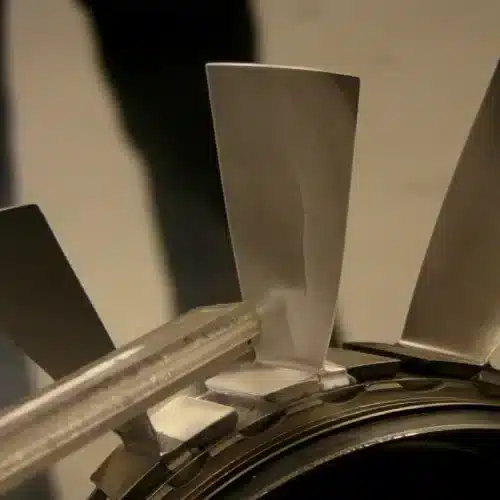
Dry ice blasting removes carbon deposits, oils, and particulate matter from blades, combustion chambers, and compressor sections. The process cleans turbines in-place without full disassembly. Power producers have reported reducing turbine cleaning time by 90%—an 8-megawatt turbine was cleaned in four hours with dry ice cleaning versus five days when using manual methods.
-
Heat Recovery Steam Generators (HRSG)
Cold Jet dry ice blasting removes ammonia salts (Ammonium Bisulfate), sulfur deposits, insulation, iron oxide, and fouling from tube bundles without damaging tube bundle welds. Dry ice cleaning reaches between closely-spaced tube fins and restores heat transfer efficiency. Facilities report 40% faster cleaning compared to competitive methods, with power output improvements of 12% versus 4% with traditional methods.
-
Compressors & Auxiliary Systems
Dry ice blasting cleans rotating equipment, starting motors, alternators, and auxiliary systems without disassembly. The process removes oils, carbon, and debris that accumulate on these components, maintaining equipment reliability while minimizing downtime.
Dry ice blasting cleans the following equipment in natural gas power plants:
-
Turbine Blades & Combustion Chambers
-
Compressor Sections & Outer Casings
-
Starting Motors
-
Stator & Rotor Windings
-
Alternators & Switchgear
-
Tube Bundles & Sheets
-
HRSG Finned Tubes & Economizers
-
Regenerators & Inlet Houses
Hydroelectric Facilities
Dry ice blasting restores aging assets by removing decades of buildup without damage. The moisture-free process prevents electrical tracking in windings, significantly improves insulation resistance and PI readings, eliminates secondary waste entering the watershed, and extends the operational life of critical components.
-
Generator Stators and Windings
Cold Jet dry ice blasting safely cleans all generator components—from delicate windings to stubborn contamination on cast iron housings. Utilities document insulation resistance improvements averaging 600%, with some generators showing 1,000% improvements. Polarization indices improved from critical levels (1.04) to acceptable range (2.30). A hydroelectric plant restored a generator considered ‘beyond salvage’ and returned it to full service in just six days using dry ice blasting.
-
Turbine Components
Dry ice blasting removes sediment and algae from water turbines, penstocks, and draft tubes without damaging turbine runners or requiring complete disassembly. This restores hydraulic efficiency and extends equipment operational life.
-
Electrical Cabinets & Control Systems
The non-conductive cleaning process safely removes dust and contamination from sensitive control systems, protective relays, and electrical panels. This prevents grounding faults and equipment malfunctions that can lead to system failures.
Dry ice blasting cleans the following equipment in hydroelectric facilities:
-
Turbine Runners (Francis, Kaplan, Pelton)
-
Penstocks
-
Draft Tubes
-
Generator Housings
-
Stator & Rotor Windings
-
Excitation Systems
-
Control Cabinets & Protective Relays
-
Switchgear & Electrical Panels
Nuclear Power Generation
Dry ice sublimates completely upon impact, producing zero secondary waste—a critical advantage in nuclear environments where disposing of contaminated water or abrasive media often costs more than the cleaning itself.
-
Operating Facility Maintenance
Dry ice blasting maintains heat exchangers, steam generators, turbines, pumps, electrical components, and ventilation systems without generating contaminated water or spent media requiring disposal as radioactive waste. The process effectively removes radioactive contamination ranging from Class A through Class C, removes buildup and surface contamination without damaging sensitive components, and reduces radiation exposure time for maintenance personnel.
-
Decommissioning & Decontamination
Cold Jet dry ice blasting removes radioactive contamination from walls, floors, hot cells, gloveboxes, equipment, and ductwork. The process minimizes waste volume by 90% or more compared to abrasive blasting, significantly reducing disposal costs. During Post-Operational Clean Out (POCO) phases, dry ice blasting removes loose radioactive contamination, dust, scale, and chemical residues from internal plant surfaces, reducing background contamination levels for clearance and verification. Dry ice cleaning decontaminates concrete, steel, and painted surfaces with minimal substrate damage while meeting regulatory standards.
-
Component & Equipment Cleaning
Dry ice blasting cleans pumps, valves, piping, instrumentation, tools, handling equipment, and robotic systems before reuse, storage, or disposal without damaging sensitive equipment. The process also cleans shielding materials including lead bricks and concrete blocks for safe reuse, and prepares areas for radiological scanning by reducing surface contamination that could affect survey readings.
Dry ice blasting cleans the following equipment in nuclear power facilities:
-
Steam Generators
-
Heat Exchangers
-
Pumps, Valves, & Piping
-
Stator Tubes
-
Hot Cells & Gloveboxes
-
Scaffolding & Tooling
-
Ventilation Ducting
-
Floors & Walls
-
Instrumentation & Sensors
-

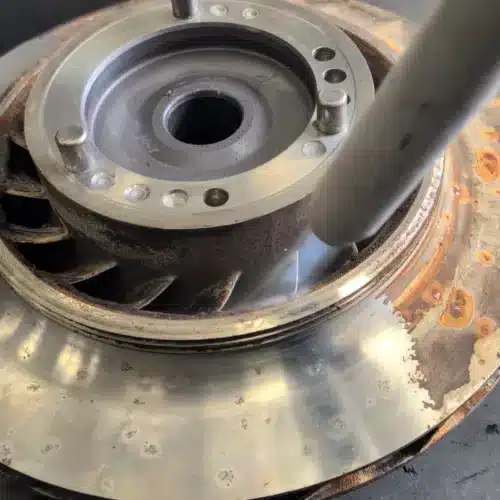
Dry ice blasting removing surface rust from turbine compressor component
-
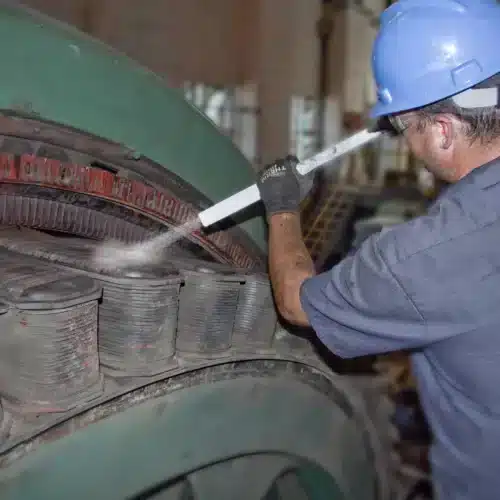
Cleaning hydroelectric generator with dry ice blasting
-
Dry ice blasting is used in nuclear facilities for decontamination and cleaning
Steam Generation & Coal-Fired Plants
Dry ice blasting restores thermal efficiency in coal-fired facilities by removing heavy slag, soot, and scale without secondary waste. It eliminates the risk of corrosion in boiler tubes and allows for immediate inspection or return to service. By maintaining peak heat transfer rates and reducing differential pressure across catalysts, facilities can significantly lower fuel consumption and emissions.
-
Boiler Systems
Dry ice blasting removes ash, soot, and scale from boilers, superheaters, economizers, and tube banks. It effectively breaks up bridging between tubes that traditional methods struggle to reach. The process leaves surfaces ready for inspection and non-destructive testing, allowing immediate return to service without drying time.
-
Steam Turbines & Condensers
Cold Jet dry ice blasting handles routine maintenance of steam turbine rotors, diaphragms, and casing internals. It removes deposits from condenser tube sheets and auxiliary cooling systems, improving vacuum performance and overall plant heat rate.
-
Air Quality Control Equipment
Dry ice blasting is the preferred method for cleaning SCR systems and electrostatic precipitators. It safely clears honeycomb catalysts of fly ash and popcorn ash without the risk of plugging or chemical damage.
Dry ice blasting cleans the following equipment in steam generation and coal-fired plants:
-
Boiler Tubes
-
Superheaters
-
Economizers & Finned Tube Banks
-
Steam Turbine Blades, Diaphragms, and Casings
-
Air Preheaters
-
Condensers & Heat Exchangers
-
Soot Blowers & Wall Blowers
-
Selective Catalytic Reduction (SCR) Systems
-
Electrostatic Precipitators
-
Emission Control Equipment
Electrical Substations
Dry ice blasting restores the integrity of substation components by removing conductive contaminants. The moisture-free process allows utilities to perform critical cleaning during shorter maintenance windows. By eliminating surface pollutants, facilities can prevent leakage currents and flashovers that lead to unplanned outages.
-
High-Voltage Equipment
Dry ice blasting removes conductive deposits—including salt spray, coal dust, and industrial pollutants—from ceramic and polymer insulators, transformers, circuit breakers, and bushings. By stripping away these contaminants without using water or abrasives, the process restores electrical clearances to safe operating levels and effectively prevents the leakage currents that lead to flashovers, fires, and catastrophic equipment failures.
-
Control & Protection Systems
Cold Jet dry ice cleaning safely removes dust and contamination that creates grounding faults and equipment malfunctions from control cabinets, protective relays, SCADA equipment, and metering systems.
-
Distribution Equipment
Dry ice blasting safely cleans capacitor banks, voltage regulators, auxiliary equipment, and distribution infrastructure without extended outages. The process removes environmental contaminants from cooling fins and insulators, ensuring these systems maintain optimal power factor correction and grid stability.
Dry ice blasting cleans the following equipment in electrical substations:
-
Ceramic & Polymer Insulators
-
Transformer Bushings & Radiators
-
Circuit Breakers & Isolators
-
Switchgear & Busbars
-
Control Cabinets & Wiring Harnesses
-
Protective Relays & SCADA Racks
-
Voltage Regulators
-
Capacitor Banks
-
Cleaning generator stator windings in steam generation plan with dry ice blasting
-
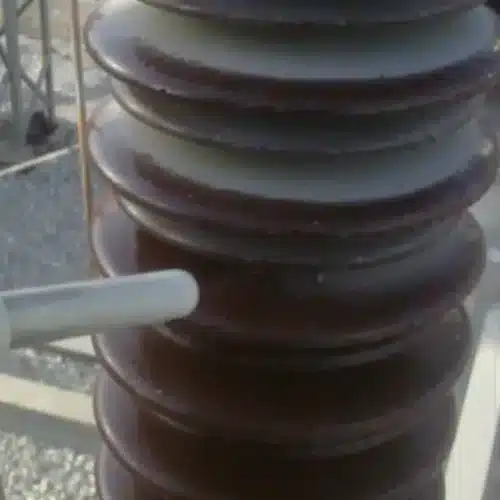
Dry ice blasting being used to clean a high-voltage insulator at an electrical substation
-
Cleaning metallic fins on steam turbine rotor with dry ice blasting
What Do Power Generation Operators Need for Dry Ice Cleaning?
An effective dry ice cleaning setup for power generation operations requires these essential components:
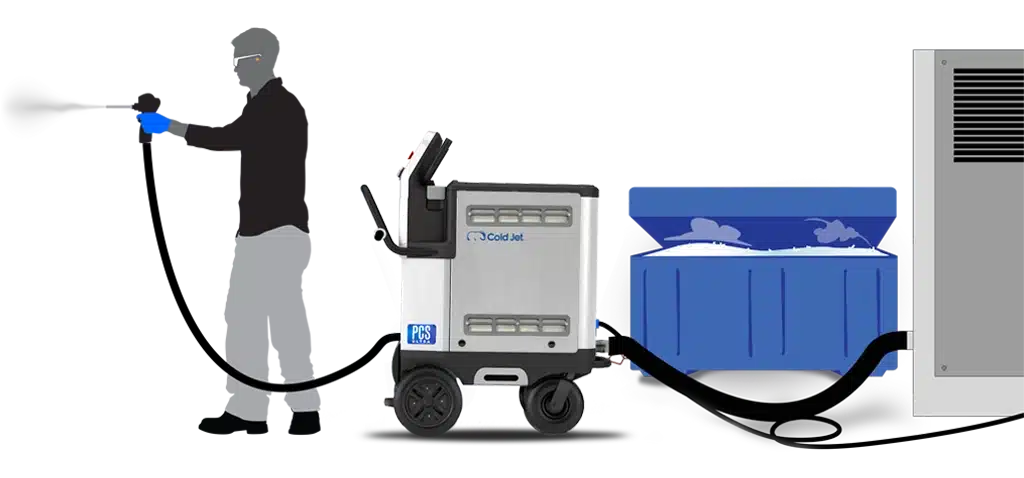
-
Dry Ice Blaster
A dependable and versatile dry ice blaster is essential for power generation maintenance. Cold Jet machines feature our patented Particle Control System (PCS®) for precise control over particle size and cleaning intensity—from gentle MicroParticle settings for electrical insulation to aggressive 3mm pellets for heavy contaminant removal. Portable designs allow operators to bring equipment directly to the areas that need maintenance.
-
Compressed Air
Plant air systems provide adequate compressed air supply. Portable diesel compressors serve as alternatives for remote locations or areas without permanent air infrastructure.
-
Dry Ice Supply
Consistent access to dry ice keeps your maintenance program running smoothly. Cold Jet can connect you with regional dry ice suppliers and help determine order volumes based on your cleaning needs. Coordinate delivery schedules with your maintenance calendar and planned outages.
-
Operator Training
Effective operation of dry ice equipment in power generation requires adequate training. Cold Jet provides comprehensive training that covers machine operation, safety protocols, and best practices for cleaning.
-
Personal Protective Equipment (PPE)
Operators must wear appropriate safety gear including gloves, hearing protection, and eye protection.
What Is the Best Dry Ice Blaster for Power Generation?
Power generation operators choose from Cold Jet’s full lineup of dry ice blasters to match their specific maintenance needs. Popular systems for power generation operations include:
-
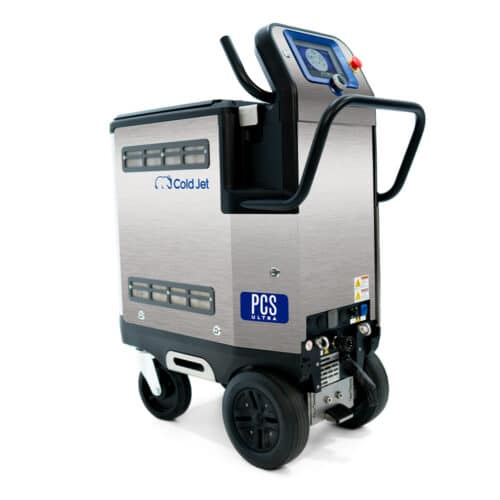
Aero2 PCS ULTRA
The most versatile machine for diverse power generation applications. Seamlessly transitions from delicate generator windings with MicroParticle dry ice to aggressive carbon removal on turbines using 3mm pellets. Programmable recipes save optimized settings for different equipment types.
Aero2 PCS® ULTRA -
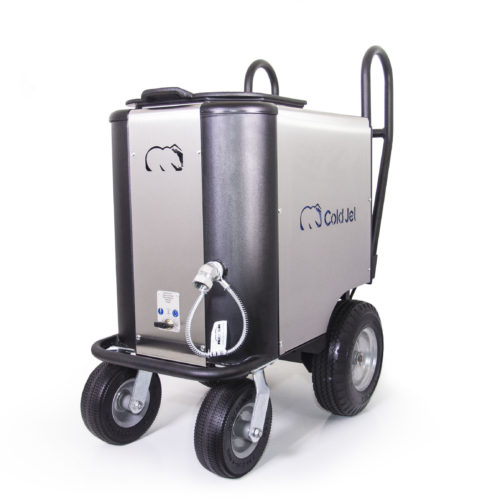
Aero 40FP
Maximum cleaning power for heavy carbon buildup on gas turbines and stubborn HRSG fouling. Advanced air delivery system ensures consistently powerful, pulse-free blasting for tough contaminants.
Aero® 40FP -
Elite 20
Durable blaster designed for all types of power generation cleaning. Features stainless steel construction and easy-adjusting dosing system. Economical solution for routine maintenance across a wide range of equipment.
IceTech® Elite 20
Why Choose Cold Jet Dry Ice Cleaning Machines in Power Generation?
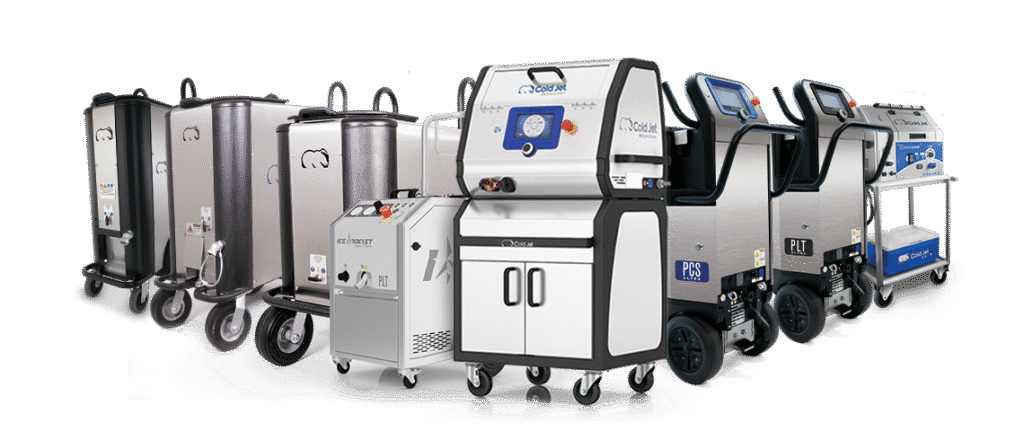
Cold Jet delivers the industry’s most comprehensive portfolio of power generation dry ice cleaning equipment engineered for reliability during critical outage windows. Our machines provide superior ROI and longer-term value.
-
Proven Industry Experience
We’ve worked with utilities, IPPs, and power plant operators worldwide to address their most demanding maintenance challenges. Cold Jet brings decades of specialized experience serving the power generation industry.
-
Built for Demanding Environments
Cold Jet dry ice blasting machines are built to withstand rigorous power plant conditions. Our equipment delivers exceptional reliability and substantially longer service life than competing models.
-
Superior Efficiency
Cold Jet equipment is engineered for maximum efficiency, consuming less dry ice and compressed air than competing systems. This efficient operation directly reduces operating expenses while maintaining superior cleaning performance.
-
Comprehensive Customer Support
Our service team is here when you need us. We provide operator training, technical support, and equipment repair to keep your operations running smoothly.
-
Application-Engineered Accessories
Extensive catalog of specialized applicators, blast hoses, and application-specific nozzles optimized for power generation operations.
OUR CUSTOMERS & WHAT THEY SAY ABOUT US
Proven Performance Across the Power Sector
Cold Jet provides mission-critical dry ice cleaning solutions for the world’s most demanding power generation environments.
Frequently Asked Questions
WE ARE HERE TO HELP.
Interested but don’t know where to start?
Contact us today to learn more about our solutions and see how they can meet your unique needs.