Extend Asset Life and Reduce Service Disruptions with Moisture-Free Dry Ice Blasting for Freight Rail and Public Transit
Cold Jet’s dry ice blasting machines deliver superior cleaning results for rail transportation operators, public transit systems, and locomotive maintenance facilities. By replacing labor-intensive manual scraping, hazardous chemical solvents, water-based cleaning methods, and time-consuming disassembly with a non-abrasive, non-conductive, completely dry solution, rail operators achieve the following results with dry ice cleaning:
- Up to 50% Faster Turnaround on Rolling Stock: Clean bogies, wheelsets, and undercarriages dramatically faster than manual scraping or solvent washing. Operators can cut total maintenance dwell time in half.
- Prevent Costly Traction Motor & Control Failures: Safely deep-clean traction motors, electrical cabinets, and signaling equipment without moisture. This eliminates the risk of catastrophic shorts and avoids the drying times required by aqueous cleaning.
- Improve Technician Safety & Ergonomics: Protect workers by eliminating the need for hazardous chemical solvents and torches. The reach of dry ice blasting allows for cleaning in tight spaces, reducing the need for awkward positioning around pinch points and heavy machinery.
- Safe for Electrical Systems: Non-conductive dry ice allows for the precision cleaning of electrical cabinets, third-rail insulators, and transformers without the risk of shorts or damage to sensitive insulation.
- Zero Flash Rust or Secondary Waste: Because dry ice sublimates on contact, there is no water left behind to cause flash rust on steel frames. Eliminate the cost of collecting and disposing of contaminated grit, wastewater, or hazardous solvents.
- Maximize Availability with In-Situ Cleaning: Maintain propulsion systems and brake assemblies year-round without the need for full disassembly. Because the process is dry and non-abrasive, equipment can be cleaned in-place and returned to service immediately.
Ready to reduce service disruptions and extend the life of your rail equipment? Contact us today to learn how Cold Jet dry ice blasting machines can cut maintenance time in half, protect sensitive electrical components, and keep your rail cars, locomotives, and public transit systems running at peak performance.
What are the Benefits of Dry Ice Blasting for Rail Transportation?
Maximize rolling stock availability and minimize maintenance dwell time
Cold Jet dry ice blasting is non-abrasive, non-conductive, and effectively removes grease, adhesives, brake dust, and contaminants without damaging delicate electrical systems or metal surfaces. Because dry ice sublimates on contact, it produces no secondary waste, leaves no moisture that causes flash rust, and enables operators to clean equipment faster, more thoroughly, and more economically than traditional methods.
Traditional rail cleaning methods involve manual scraping, chemical solvents, and water-based processes like pressure washing. These methods are abrasive and damage sensitive electrical components, cause immediate flash rust on metal surfaces, create operator safety hazards from chemicals and torches, and require equipment to be removed from service—resulting in significant downtime and labor costs.
Cold Jet dry ice blasting eliminates these pain points and provides the following benefits for public transportation and freight rail:
-
Drastic Reduction in Dwell Time
Cold Jet dry ice blasting equipment removes grease, brake dust, adhesives, carbon deposits, and paint from all areas of rail equipment, including electrical systems, mechanical assemblies, and undercarriage components. Dry ice blasting reduces cleaning times by up to 50% and helps rail operators meet stringent productivity demands. It helps operators clean faster, better, and more economically, increasing operational capacity and improving equipment reliability.
-
Safe Around Electrical Systems
Dry ice cleaning is non-conductive, making it safe for cleaning high-voltage equipment, electrical cabinets, power collection systems, traction motors, and sensitive electronics without risk of electrical shorts or damage. This makes dry ice blasting ideal for cleaning around electrical connections and live equipment in both public transit and freight rail operations.
-
Keeps Operators Safe
Dry ice blasting keeps operators’ hands away from dangerous pinch points during cleaning of undercarriage components, mechanical assemblies, and wheelsets. The process eliminates the need for torches, harsh chemical solvents, and manual scraping with wire brushes, reducing burn hazards, chemical exposure, and repetitive strain injuries. Rail operators report significant safety improvements compared to traditional cleaning methods.
-
No Flash Rust or Secondary Waste
Cold Jet dry ice blasting offers a distinct advantage because it produces no secondary waste and leaves no moisture. As dry ice sublimates into a gas upon impact, there’s no need for water, harsh chemicals, or other cleaning solutions. This means no moisture, chemicals, or secondary media residue are left on equipment, preventing flash rust on metal components and eliminating disposal costs entirely. This is critical for rail operations where water-based cleaning causes immediate corrosion.
Dry Ice Blasting Applications for Rail Transportation
Cold Jet dry ice blasting equipment provides cleaning and maintenance solutions in two primary rail transportation sectors:
-
Passenger Rail & Public Transit
-
Freight Rail & Locomotive Maintenance
Passenger Rail & Public Transit Applications
Maximize fleet availability with rapid, moisture-free dry ice cleaning
Traditional public transit cleaning methods are slow, create secondary waste requiring disposal, and cannot safely clean electrical systems. Cold Jet dry ice blasting cuts cleaning time in half compared to manual methods, produces zero secondary waste or moisture (eliminating disposal costs and flash rust entirely), and is non-conductive—making it safe for cleaning live electrical equipment. This helps rail operators and transit authorities clean more equipment in less time, reduce maintenance costs, and safely maintain critical electrical infrastructure.
-
Propulsion and Electrical Systems
Because dry ice sublimates instantly, leaving no residue, this is the preferred method for high-voltage and sensitive electrical equipment. The process safely cleans traction motors, electrical cabinets, switchgear, generators, alternators, third rail insulators, and cam controller boxes—removing carbon dust, grease, oxidative residue, and buildup that cause grounding issues, overheating, and power leakage. A major transit authority expanded their dry ice blasting equipment from 1 unit to 7+ systems as applications grew, avoiding an $80,000 semi-conductor controller box replacement, and saving 10-15 person-days of labor per rebuild.
-
Transit Infrastructure & Passenger Areas
Dry ice blasting removes stubborn contaminants from public transit infrastructure and passenger facilities that traditional cleaners struggle with. Rail tracks are cleaned of compressed organic matter that causes wheels to slip, while switch points are cleared of grease and debris to ensure they move freely and lock correctly, preventing service disruptions. The process completely removes conductive metallic brake dust that accumulates on rail insulators and electrical infrastructure—if this dust builds up, it creates a path for electricity to jump to ground, causing fires or power outages. The process lifts grime from railcar exteriors and station walls without substrate damage, removes chewing gum on station floors, and removes adhesive from decals and fleet graphics. HVAC systems including air conditioning coils and ventilation stacks are deep-cleaned to improve air quality and efficiency. Soot and brake dust are removed from tunnel and station walls, tile, and concrete surfaces. This dry, chemical-free approach cleans public-facing infrastructure without mess or extensive cleanup.
-
Braking and Mechanical Systems
Cold Jet dry ice blasting cleans brake controllers, actuators, and air lines to ensure optimal mechanical response. The process removes carbon deposits and environmental debris from pantographs, the overhead power collection arms critical to electric rail operations. By cleaning these systems in-place, operators maintain consistent braking performance and electrical power collection while minimizing service interruptions.
-

Cleaning undercarriage of passenger rail car with dry ice blasting
-
Removing residue and grime from interior of subway car with dry ice blasting
-
Removing paint from exterior panel of subway car with dry ice blasting


Dry ice blasting cleans the following equipment in passenger rail and public transit operations:
-
Traction Motors
-
Electrical Cabinets & Switchgear
-
Generators & Alternators
-
Third Rail Insulators
-
Cam Controller Boxes
-
Brake Controllers & Actuators
-
Air Lines
-
Pantographs
-
Railcar Exteriors
-
Station Walls
-
Train Cabin Interiors
-
Passenger Platforms
-
Rail Tracks
-
Switch Points
-
Ventilation Stacks
Freight Rail & Locomotive Maintenance Applications
Speed up maintenance, prevent flash rust, and eliminate disposal costs with dry ice blasting
Freight rail operators face significant challenges maintaining clean locomotive components and rail car assemblies. Traditional cleaning methods such as manual scraping, pressure washing, or abrasive blasting are time-consuming, cause flash rust, damage equipment, and result in high labor costs. Dry ice cleaning offers an in-place, quick, and effective way to clean without causing damage to expensive equipment or creating secondary waste.
-
Rolling Stock & Mechanical Components
Dry ice is powerful enough to remove heavy industrial grease but gentle enough not to damage seals or bearings. The process cleans bogies, wheelsets, railroad axles, bearings, springs, gears, mechanical assemblies, and diesel engine blocks at operating temperature while keeping operators’ hands away from dangerous pinch points. For locomotive surface preparation, dry ice blasting prepares surfaces for recoating without flash rust or moisture, achieving superior paint adhesion. A major locomotive manufacturer achieved complete removal of coatings while reducing dust significantly compared to traditional abrasive blasting. A rail maintenance facility achieved carbon removal in less than 5 seconds per part, while maintenance teams reported significant safety improvements by eliminating manual scraping near pinch points.
-
Locomotive Electrical & Power Systems
Dry ice blasting safely cleans locomotive electrical components, generators, alternators, and power distribution systems without conductive materials or moisture damage. The process removes carbon buildup, oil mist, and contaminants from diesel-electric generators, traction alternators, electrical control cabinets, and circuit breakers at operating temperature. Cleaning these systems improves electrical performance, prevents shorts and failures, and extends component life without disassembly. Multiple locomotive manufacturers and maintenance facilities use dry ice blasting for electrical system cleaning, reporting improved reliability and reduced failure rates. The non-conductive process is safe for use around live electrical systems and sensitive electronics.
-
Paint Booth & Refurbishment Facilities
Dry ice blasting effectively cleans paint booths, spray equipment, and overspray buildup without introducing moisture or abrasive media into finishing environments. The process removes accumulated paint, primers, and coatings from booth walls, floors, ventilation systems, and spray equipment without requiring booth disassembly or extended downtime. Rail car refurbishment facilities use dry ice blasting to maintain clean finishing environments, improve coating quality, and reduce contamination between paint jobs. A major rail car lessor purchased multiple systems specifically for paint booth maintenance, achieving faster cleaning cycles and improved booth performance compared to chemical stripping methods.
-
Cleaning freight car axels with dry ice blasting
-
Removing asphalt from freight car with dry ice cleaning
-
Cleaning freight car undercarriage with dry ice blasting


Dry ice blasting cleans the following equipment in freight rail and locomotive operations:
-
Bogies & Wheelsets
-
Railroad Axles & Bearings
-
Springs & Gears
-
Mechanical Assemblies
-
Diesel Engine Blocks
-
Cooling Fans & Radiators
-
Tank Car Interiors
-
Conduits & Piping
-
Valves & Steam Lines
-
Exhaust Stacks
-
Storage Tanks
-
Locomotive Exteriors
-
Diesel-Electric Generators
-
Traction Alternators
-
Electrical Control Cabinets
-
Power Distribution Systems
-
Paint Booth Walls & Floors
What Do Rail Operators Need for Dry Ice Cleaning?
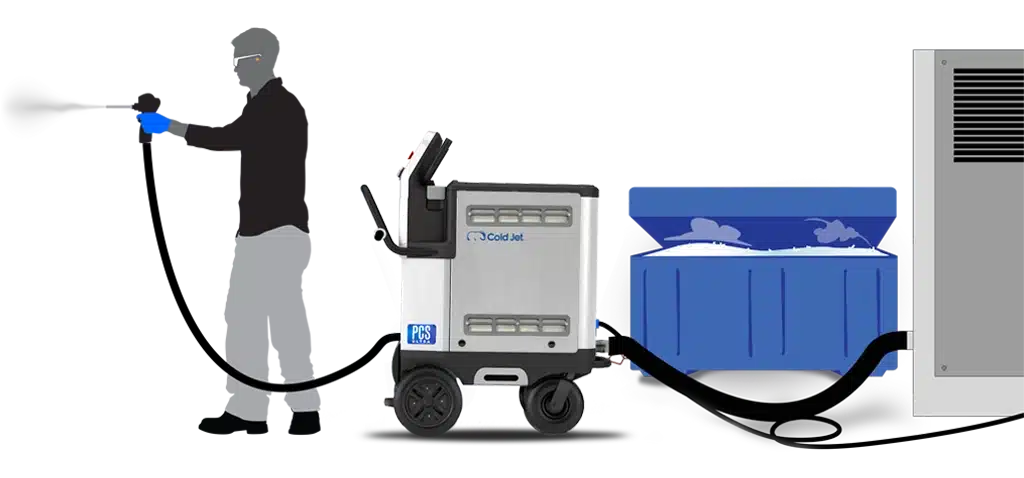
A dry ice cleaning configuration for rail maintenance relies on several key parts:
-
Dry Ice Blaster
A successful rail equipment cleaning process starts with an easy to use and mobile dry ice cleaning machine. Cold Jet offers a complete range of dry ice blast cleaning machines, featuring advanced models with IoT connectivity and our patented Particle Control System (PCS®). This innovative technology gives you the power to precisely adjust cleaning parameters and dry ice particle size, ranging from very delicate electrical component cleaning to more aggressive adhesive removal. Each blaster arrives ready with blast and air hoses, an applicator, and a nozzle for your specific application.
-
Compressed Air
Most rail maintenance facilities have existing filtered air systems that can supply the required compressed air. For field operations, diesel air compressors can provide the compressed air.
-
Dry Ice Supply
A reliable supply of dry ice is needed to ensure you have dry ice when you need it. We can help you identify a dry ice supplier and recommend the amount you should order based on your needs. Once identified, establish a delivery schedule that aligns with your maintenance and operational schedules.
-
Machine and Operator Training
To ensure your team can effectively and safely use your dry ice cleaning equipment for rail applications, proper training is essential. Cold Jet provides comprehensive training that equips operators with the necessary techniques and safety guidelines for optimal cleaning practices.
-
Personal Protective Equipment (PPE)
Always ensure your cleaning team wears the correct safety gear, including gloves, hearing protection, and eye protection while operating your dry ice blaster.
What Is the Best Dry Ice Blaster for Rail Transportation?
Rail operators choose from Cold Jet’s full lineup of dry ice blasters to match their specific maintenance needs. Popular systems for rail transportation and public transit operations include:
-
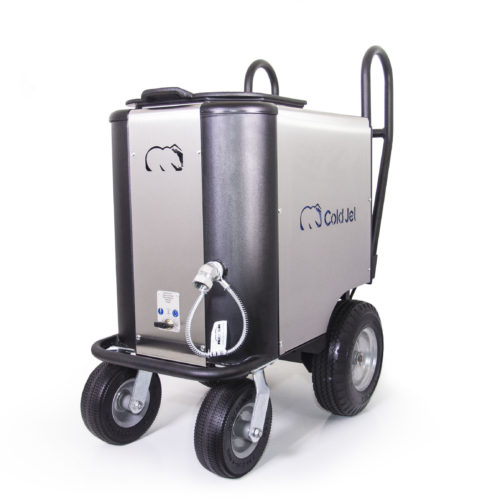
Aero 40FP
The Aero 40FP offers greater power to tackle even the most stubborn contaminants like heavy carbon buildup and thick grease on locomotive equipment. Its innovative air system allows for consistently powerful, pulse-free blasting. Ideal for freight rail and heavy-duty locomotive maintenance.
Aero® 40FP -
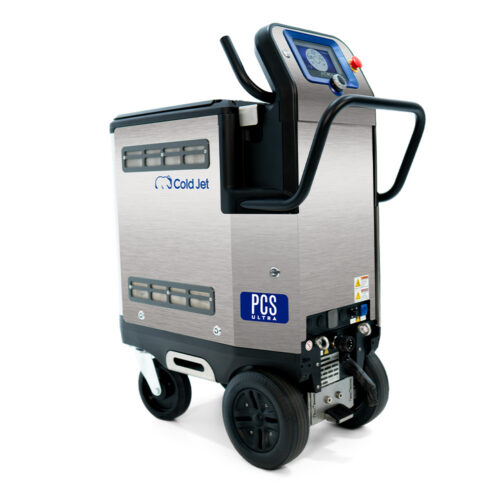
Aero2 PCS® ULTRA
The Aero2 PCS ULTRA is a highly versatile machine for all types of rail equipment. The mobile dry ice blaster handles everything from gentle cleaning of delicate electrical components with MicroParticle dry ice to aggressive cleaning of heavy grease and carbon deposits using 3mm dry ice.
Aero2 PCS® ULTRA -
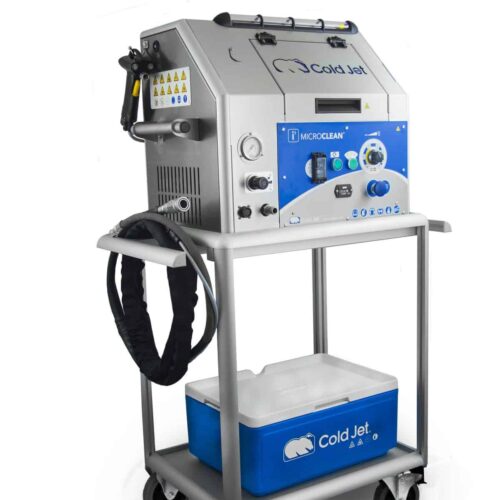
i3 MicroClean®
The i3 MicroClean features intuitive controls in a lightweight, compact design, perfect for cleaning sensitive electronics like semi-conductor motor controller boxes, brake actuators, and precision instruments. It is safe around electrical systems, prevents damage to expensive components, and is ideal for public transit authority maintenance.
i3 MicroClean®
Why Choose Cold Jet Machines for Rail Transportation Cleaning?
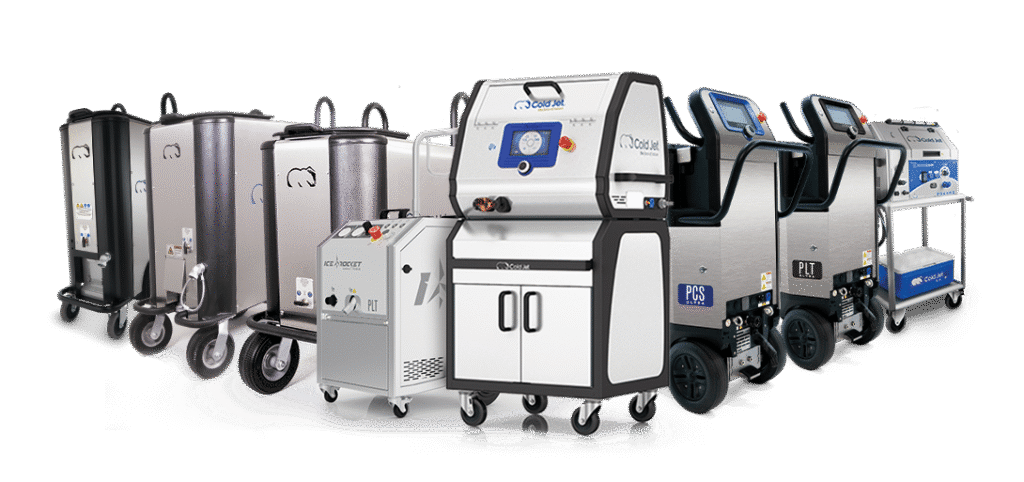
Cold Jet offers a wide range of rail transportation dry ice cleaning equipment. When incorporating dry ice blasting into your rail and public transit cleaning processes, you need a durable and reliable machine you can count on. Cold Jet machines deliver faster ROI and greater value than competitors.
-
Trusted Rail Transportation Expertise
With decades of experience in rail transportation, Cold Jet has developed an unparalleled understanding of the critical cleaning challenges that rail operators and transit authorities experience. We’ve worked with some of the world’s largest transportation authorities to deliver reliable dry ice blasting solutions for their most demanding maintenance operations. With over 24,000 dry ice cleaning machines installed worldwide at leading rail operators and transit authorities, Cold Jet is the proven, trusted solution for rail equipment cleaning.
-
Industry Leading Reliability
Our machines are engineered to thrive in demanding rail environments. Cold Jet dry ice blasters offer unmatched reliability and a significantly longer lifespan than competitor models. Rail operators rely on Cold Jet equipment for daily use across multiple shifts in harsh conditions.
-
Lower Operating Costs
Cold Jet dry ice cleaning equipment is designed for maximum efficiency, using significantly less dry ice, compressed air, and electricity than competitor machines. This directly reduces your daily operating costs without compromising on the highest standards of cleaning quality or safety.
-
Unmatched Support and Training
Our regional technicians are readily available and offer both expert maintenance services and comprehensive equipment training to ensure your team’s success.
-
Application Specific Accessories
Cold Jet offers a wide array of accessories including applicators, blast hoses, and application-specific nozzles to optimize your cleaning setup for rail operations. Our team will help you select the right nozzle configuration based on your specific cleaning needs.
OUR CUSTOMERS & WHAT THEY SAY ABOUT US
Rail operators and transit authorities around the world rely on Cold Jet
With over 24,000+ machines installed globally, Cold Jet delivers reliable dry ice cleaning solutions for rail transportation operations.


Frequently Asked Questions
WE ARE HERE TO HELP.
Interested but don’t know where to start?
Contact us today to learn more about our solutions and see how they can meet your unique needs.